
What first sparked your interest in live events?
I never set out to work in events. It was in the family, but my dad (Dick Tee, EnTEEtainment Founder) actively discouraged me from it. The moment it clicked for me was a small event I put on at secondary school. Nothing fancy, but I remember watching a room full of people having a genuinely good time and thinking, “I want more of this”. Not long after, I went to help out in the admin office at Glastonbury, and I’ve never really looked back.
How has 2026 treated you and the team?
Honestly? A bit of everything. We started early, in January, assisting with production management for a special premiere at Windsor Castle. Not long after that, a few clients cancelled or scaled back their shows, and for a while it looked like it might be a very quiet year for us. Then things picked up, and quickly. I need to remind myself of that more often, because they always do.
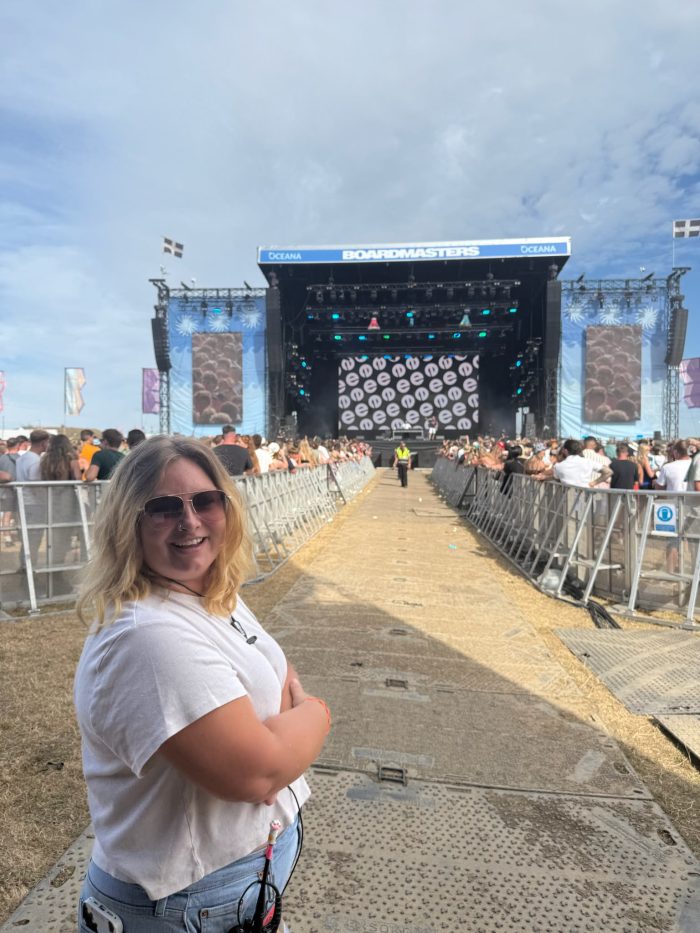
Once the season got going, we were back for our sixth 6 Music Festival, looking after technical production and artist liaison. We ran technical production across two weekends at Brockwell Live, and delivered Vanlove at Thruxton and Nelson Mandela Day in Trafalgar Square. That last one came together at short notice. Boardmasters was our first year, and we’re already looking forward to 2027. Then, just as I was about to settle into a break, I was asked back to Reading Festival. It had been five years since I was last there, and it was lovely to see so many familiar faces. Hiring well was one of the best things we did this year. We brought in a new colleague, and a few of the other people who applied were so good that we worked with them freelance over the summer.
Best piece of advice you’ve ever been given?
It’s a toss-up between “Everyone’s job is as important as everyone else’s.” and “Don’t ask your team to do something you wouldn’t be prepared to do yourself.” I think about it on every site. The show doesn’t open without the steward on the gate in the rain, or the runner who finds the missing cable at 6am. It’s shaped how I run a team. Nobody’s job is beneath anyone else’s, including mine.
What’s one myth you’d happily debunk?
Ask my friends and they’ll tell you I spend my summers partying with famous people. I’ve kind of given up correcting them. The myth I’d actually like to put to bed is that show day is the hard part. Show day is the reward. The hard part is the months before – the licensing, the safety documents, the advancing, the budget conversations. Then there’s the get-out after everyone’s gone home. If the planning’s right, the best show days are almost boring. If a show day is chaotic something went wrong long before the gates opened.
If you could change one thing about live events, what would it be?
Loyalty. When I first came into the industry, you could more or less rely on your calendar for years ahead. Shows ran on a rolling basis: you did it every year until you didn’t. It was the promoter asking whether you were coming back, not the other way round. Unless you got something wrong or costs jumped, you’d work with the same client for years, and the shows were better for it.
I understand the need for competition, and tenders and quotes are the right way to keep pricing honest. But when every project could be up for quotation every single year, it changes how everyone works. If you always think this year could be your last, you stop looking ahead. You don’t plan the improvement that would take three years to land. You can’t commit to suppliers in the same way, so they can’t commit to you either. You also lose the team that knows the site and knows which gate floods. When you know you’re in it for the long run, you build the show together and it gets better every year. Continuity isn’t a luxury. It’s how a show gets better.
What’s still on your professional bucket list?
I’ll be bold: going back to Glastonbury. It’s where this all started for me, in the admin office, and I’d love to go back doing what I do now. Proper full circle. And a country music festival, a proper UK version of Stagecoach. Someone’s going to build it (or maybe already is), and I’d love to be part of it.
45 years of EnTEEtainment and stepping in as MD – what does the next chapter look like?
The first job is looking after what’s already here. EnTEEtainment has 45 years of values that have served us really well, and I want to keep them. At the same time, I want to change how we work to fit how people actually want to work now. A big part of that is people. I want to build a company where women in this industry can shine, without it having to be a statement. That means hiring the best people in the business, whatever their background, and then actually supporting them.
I also want us to lead the way on staff and freelancer welfare. I don’t mean a policy document. I mean how it feels to work on one of our sites. Beyond that, there are some new avenues for the business I’m really excited about. Watch this space.
This story originally appeared in TPi Magazine #296.

