
Having worked with numerous artists, from DJ Snake to David Guetta, could you describe how you and the team begin a collaboration with an artist, and how those initial conversations eventually evolve into the content used during a live show?
“For us, it always starts with the idea, not the technology. That’s a really important distinction. We sit down with the artist and work out the story they want to tell, the world they want to build, the feeling they want the crowd to have. Only once we have that concept locked do we ask ourselves which techniques will bring it to life. And we have a huge range to pull from. It might be hand drawing, 2D animation, shooting with the artist directly, miniature shoots with real props, generative tools, or traditional 3D and simulation. We’re really proud of that breadth, because it means we’re never forcing an idea through one pipeline. We pick the right technique for the story. From there it moves into previz, then onsite programming. We start from an idea and build everything- narrative, content, staging, around that one idea. The concept leads, the tech follows.”
Although every project is different, do you find there are certain common themes or visual elements DJs consistently look for in their shows? Are there any recent video effects, styles, or creative trends that you’re personally excited about right now?
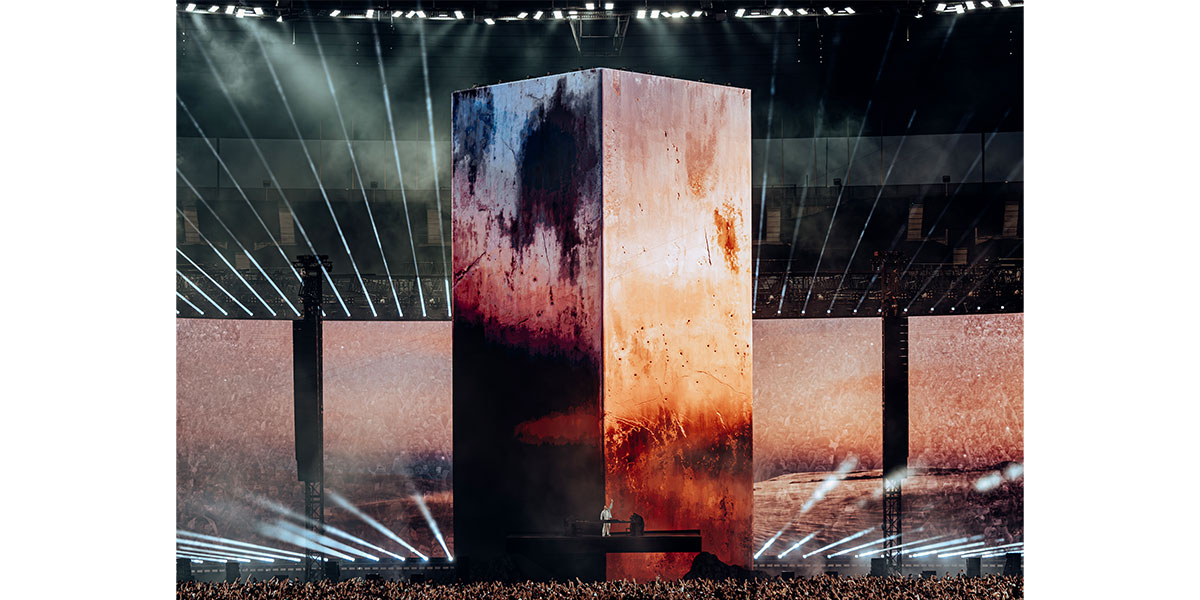
“Two things come up again and again. The first is wanting to alter the environment, to take the crowd somewhere else, like outer space or transforming / extending the room. The second, just as important, is recognisability. Artists want a signature look, a moment where you could see a single photo and instantly know that it’s a Fisher show, or a David Guetta show, or a DJ Snake show. That identity is something we work really hard on. What excites me creatively is that there’s no single right approach. Some artists want a rich, maximal world with a lot going on, and others get the strongest result from one clear idea executed really well. David Guetta’s Monolith is a good example, it’s essentially one bold concept, a single monumental object, taken all the way. There’s real power in that kind of restraint. A lot of our job is working out which of those directions actually serves the artist, rather than throwing everything at the screen.”
In recent years, we’ve seen many DJ shows go viral online because of their outstanding visual content. Are you and the team more conscious now of creating moments that work not only for the live audience, but also for fans watching on social media?
“We’re conscious of it, but the room always comes first. If a moment lands for the people who are actually there, it will travel online too. What social has really sharpened is that idea of the signature, recognisable moment, the beat in the show where everything aligns and a single frame becomes iconic and instantly identifiable as that artist. We design those hero moments deliberately. But if you build purely for a vertical crop, you lose the thing that made people want to film it in the first place. The live experience is always the source, and the clip is a by-product of getting that right. It also makes the audience bigger, what used to be a show for 50,000 people now will reach millions. So there’s a bigger pressure to make the show run perfectly too.”
Could you talk about some of the latest tools – particularly on the media server and content delivery side – that have opened new creative possibilities for you and the team?
“The media server side is where a lot of the new creative possibilities come from. The hardware has taken a real leap forward, something like the new Disguise GX 3+ is so powerful it lets us push resolutions and content sizes that weren’t possible before, which genuinely changes what you can attempt creatively. Alongside that, real-time tools like Notch are central to how we work now, because they keep a show reactive and alive rather than locked to fixed playback. Generative tools are cool too, they’re letting artists take on bigger challenges and more complex looks. We’re also building small plugins and custom apps in-house that help artists animate or automate repetitive parts of the workflow, so the team can focus on the creative decisions.”
Do you feel the continued evolution of previsualisation technology has made collaboration between creatives, technicians, and artists easier? If so, in what ways?
“The previsualisation function in Disguise’s Designer software has genuinely changed how we work. Being able to build the show in 3D and preview the exact angles the audience will see, even when I’m not on set, means the whole team works from one shared reference. But the part I value most is how much it lets us share with the artist. They can see how the show will actually look and feel long before we’re in the venue, and that opens up a real back-and-forth. They give feedback, we adjust, and they walk in on the day already understanding what they’re going to experience. On the Monolith show, being able to previsualise all the forced-perspective tricks in Designer was essential, it saved us a huge amount of time on site. It turns what used to be abstract conversations into something concrete everyone can react to.”
Due to the nature of the performance, video content arguably plays a bigger role in EDM shows than in more traditional rock ’n’ roll productions. Are there lessons that creative directors working in more traditional touring environments could learn from large-scale EDM shows?
“The big one is flexibility. A traditional rock show is usually built around a fixed setlist and a timecoded run that plays the same every night. In our world the artist can change the entire set on a whim, so we’ve had to build systems that stay reactive and still look flawless. That mindset, content that adapts in real time rather than being locked to a timeline, is something any production can learn from. The other lesson is treating video as storytelling in its own right rather than just a backdrop. In EDM the screen often is the show, so we’ve learned to make it carry narrative and emotion. And that knowledge travels. We’re increasingly bringing that electronic-show energy into more traditional touring productions, and those worlds are starting to borrow from each other in really exciting ways.”
Looking ahead, what innovations or developments would you still like to see from the technology side of the industry – whether in media servers, processing, LED technology, or elsewhere?
“I always want the gap between what we can imagine and what we can physically put in front of an audience to keep closing. On the processing and media server side, pushing real-time rendering at ever bigger scale is the frontier, generating genuinely live content across enormous screens without compromise. On the LED side, I’d like to see brightness, resolution and reliability keep improving while the formats get more flexible, so we’re less boxed in by the physical shape of a screen.
“I’d also love to see better collaborative tools. So much of a show is a back-and-forth between creatives, technicians and the artist, and anything that lets us share, review and iterate together more easily, especially remotely, makes the whole process stronger. That side of the technology still has a lot of room to grow.”
Finally, what’s next for the team at High Scream?
“Mostly we’re excited about where we’re expanding. Electronic music is what we’re known for and it’ll always be at our core, but we’re increasingly taking that same energy into other worlds: more pop, artists from different scenes, and big traditional touring productions that want a bit of the High Scream touch. What excites me most is carrying our technology and our knowledge into completely different arenas, including major sports and ceremony work. More and more people are reaching out wanting that signature in their shows, so 2026 is really about exploring new frontiers, growing the team, and taking on more ambitious projects across different markets.”

