
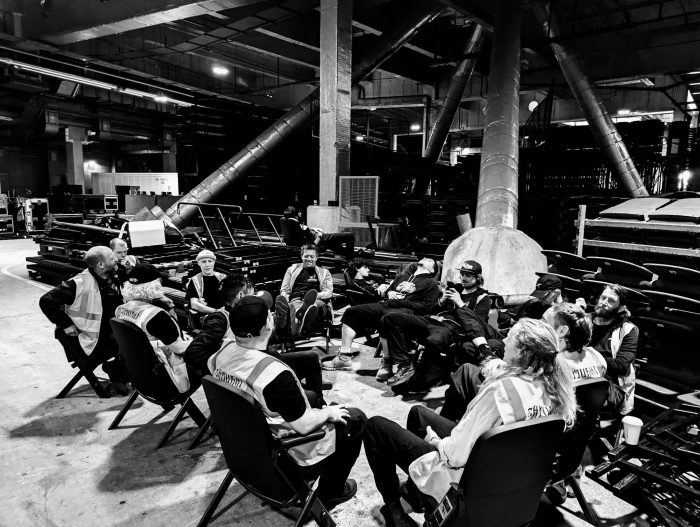
I’ve spent over 30 years in live events. I’ve worked in this industry from the ground up. Which is why partnering with Music Support wasn’t a marketing decision. It was personal.
In one way I was lucky – my late father worked in psychiatry and addiction, so I was made aware of these issues early in life. But going into this industry, you’re surrounded by substance abuse, alcohol addiction, and the toxic behaviours that inevitably come with it.
In the early days, I’d start a load-in with a line, and end the day the same way, with a line, and a bottle of red wine. That was how we sorted our problems. I’ve had two mental health crises in my career, struggled with cocaine abuse, been diagnosed with clinical depression and borderline personality disorder.
I’ve had suicidal thoughts, self-harmed, and I’ve been in psychotherapy on and off for close to six years. I still deal with my own struggles, but I’m stable, and I’m happy. I have the love and encouragement of an incredible partner who has told me I’ve a lot to offer.
For a long time, I blamed my job for a lot of that stress and there was truth in that. Getting my own health back on track meant making changes, and stepping away from the day-to-day of the business was one of them. It wasn’t an easy decision, but it was the right one for me. Things have gotten a lot better since.
This industry has given me so much joy and love – 30 years of it, or I wouldn’t still be here. People outside of this industry never quite understand the camaraderie. You get thrown together with people you’ve never met, and by the end of a job some of them are friends for life. People who’ll pick up the phone, anywhere and at any time, no questions asked.
However, the whole production chain carries the weight of this business. Long hours, high pressure, the same culture of push-through-it. We’ve built an industry on the myth of sex, drugs and rock ‘n’ roll, and that myth has let us ignore what the work does to people. Thankfully, the industry is changing. At the top, however, like every business, it’s still the numbers that get looked at first, not the wellbeing. Some companies are making real changes, and that’s welcome. There aren’t many industries where 16 to 18 hour days are the norm.
Whether you’re out on the road or working the local circuit, everyone in this industry has faced some version of the same battle: mental health, exhaustion, or being overworked. You saw it starkly during COVID – crew were stretched thin on the ground, and so many people left the industry altogether. Then the big promoters came back, the bands wanted to tour again, each bigger than the last, and there simply weren’t enough of us left to crew it properly. That strain hasn’t gone away.
A load-out that finishes at 2am, then a 7am call the next morning. By the time you factor in travel home, a shower, and whatever sleep you can grab, there’s barely any rest before you’re back on site. Add to that how touring personnel can sometimes treat local crew as hands rather than people, and it’s no surprise drink and drugs become how people cope. I know, because that was me.
What’s slowly becoming the new norm is having the courage to be honest and ask for support. Bringing that to the industry’s attention is the main drive behind partnering with Music Support. We have now signposted a handful of crews for addiction help and therapy. There’s an opportunity here, too. As we grow, Samurai crew bookings could offer a genuine soft entry back into the industry for people coming out of recovery – a lower-stakes way back in, rather than jumping straight onto a long tour with all the temptation that comes with it.
As the one doing the booking and the recruiting, I’ve watched people come in at the very bottom of this industry and go on to become some of the best in the business. Watching that climb happen, and knowing you played a part in it, is one of the most rewarding things about this job.
Recent Music Support figures show a 71% increase in demand for their services, with over half of those reaching out already in acute crisis, and more than 1,000 UK industry professionals supported last year alone.
Our clients are invited to donate as part of their booking, and we back that with a percentage of our own profit on every job, because if we’re asking people to give everything to a show, the least we can do is make sure there’s something there when the show takes more than it should. We contributed a substantial donation to Music Support in January, before the partnership was even formally signed. We’re also in early talks with Backup Tech about extending that support further. This is why we’ve started building wellbeing into how we book crew, not just into what we say about it.
As a London-based crew company, we already offer clients a pre-bookable on-site Sports Therapist for physical strain, and we’re now looking at the same principle for mental health – working with Music Support so Samurai can be engaged to organise pre-bookable, confidential online therapy support as part of a job, the same way a client comes to us to book a forklift or a followspot operator.
The aim is: make support something that’s already there before anyone must ask for it.
If you are reading this and looking for help, Music Support is there, confidentially, whether you’re touring or local, crew or management. And if any of this speaks to your own ethos – as a venue, promoter, production, or supplier – we’d welcome the conversation. Come and talk to us.
This story originally appeared in TPi Magazine #296.
Words: Jeff Singh

