
Bergen Kjøtt is one of the largest independent, non-profit music production houses on the west coast of Norway, based in Bergen. A former margarine factory that later became a meat-processing facility, the building dates back to 1905. In 2010, it became an artist-run organisation and studio. Since 2019, the non-profit Bergen Kjøtt Foundation, established by the city council, has owned the building, with a vision to create a long-term, stable resource for the city’s musicians and artists. Today, the building houses 28 studios and more than 100 long-term tenants. It has also hosted international acts including CMAT, Maisie Peters, Enslaved, girl in red and Sigrid for everything from recording to mastering.
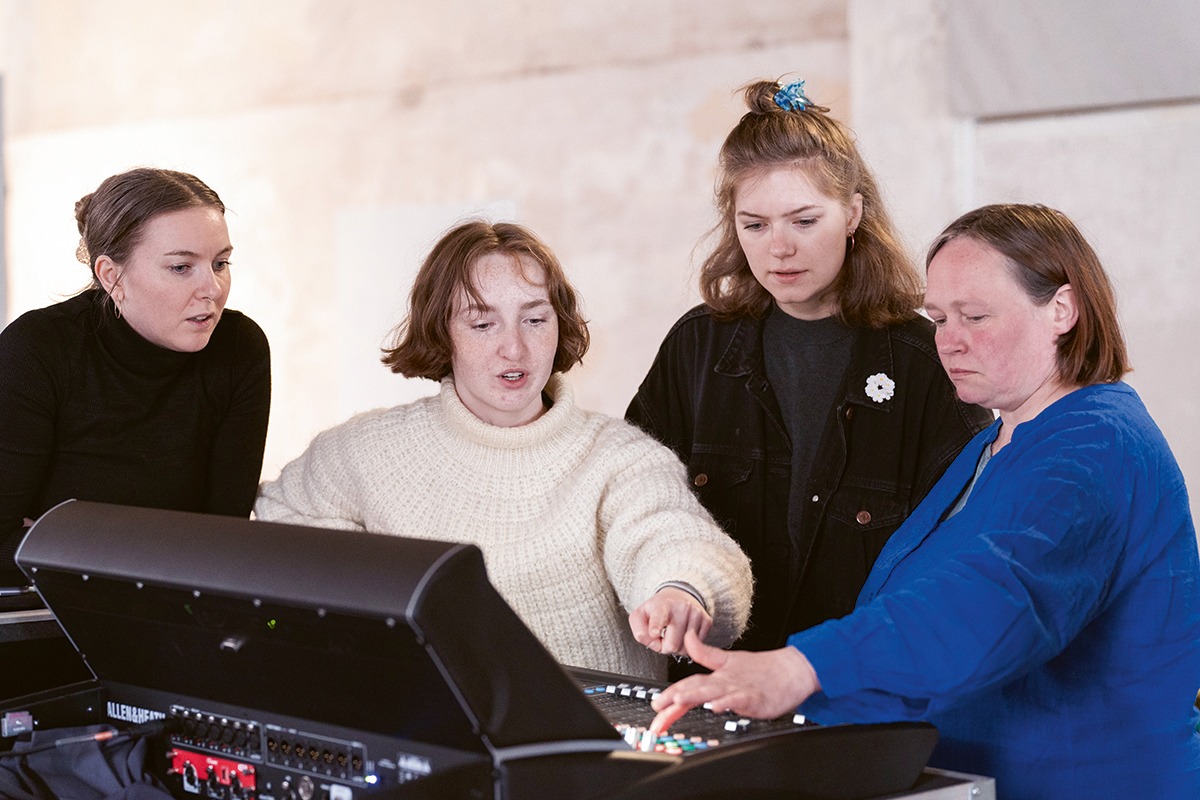
As much as Bergen Kjøtt is a home for creativity, it has more recently become a hub for education and training the next generation of audio engineers. Under the name GRIP, the venue’s own education programme has trained almost 300 people since 2021, with no signs of slowing down.
“GRIP started as an idea when we were installing a new sound system in our main venue Fabrikkhallen in 2021,” stated Bergen Kjøtt Managing Director Eva Rowson. “We received a lot of public and private funding for the new system, and I felt a strong responsibility to make the most of that investment. At the same time, sound technician Irene Bjørke was working with me. She felt there was a real lack of opportunity and space for new technicians to practise, which often created a barrier to gaining the experience needed to start working in the field.”
Rowson also highlighted the industry’s significant demand for a new generation of engineers working within the industry. “A report from Kulturrom, the Norwegian funding body for technical equipment, found that a third of technicians left the field during COVID,” explained Rowson.
The report also helped inspire her and the team to create an inclusive training programme. “The same report found that 93% of technicians in Norway are cis-male, making it one of the most gender-imbalanced sectors in society,” she explained.
With these challenges in mind, a coalition of organisations in Bergen, including AKKS Bergen, Bergen Internasjonale Teater, Carte Blanche – Norwegian National Dance Company, and Creative Technology, came together to lay the foundations for GRIP. “The goal from the start was to increase diversity in technical roles behind the scenes in culture and the number of cis-women, non-binary and transgender people working as sound technicians,” continued Rowson. “We decided to make this goal clear in all our marketing. We also agreed that GRIP should be open to everyone, all genders. This way, we aim to empower good working practices, encourage respect and support between different genders and an understanding that this huge inequity is a shared responsibility of cis-men.”
The team is pleased with the results so far. Of the almost 300 people trained through the programme, Rowson noted: “93% of our trainees are cis-women, non-binary, transgender or gender-diverse. So we have completely flipped the statistic of the ‘norm’.”
To date, GRIP has delivered 85 workshops covering sound and, more recently, lighting engineering. These include one-day introductory courses covering the basics, followed by a Stage 1 course that runs over several months and offers hands-on learning with technicians from theatre, touring, music and recording.
The Stage 2 course then delves deeper into programming, mixing, working with musicians and establishing yourself as a freelancer, helping trainees prepare for professional work.
The programme also offers numerous shadowing opportunities at events, festivals and venues. “An important aspect of this shadowing is that we pay trainees to take part, so that they can prioritise this and we can help support them to keep going and not fall off the radar after the course ends,” enthused Rowson.
Looking ahead, GRIP will pilot its first Stage 2 course in lighting engineering, led by course instructors Maja Bergebakken Sundt and Ola Fredenlund,taking a small group of new lighting trainees through the programme in the hope of helping them begin working professionally.
“We are really excited to see where this group goes,” Rowson concluded. “We’re also working on the future with the aim to expand courses for under 18s, people in smaller towns in the wider region and people with disabilities.”
This story originally appeared in TPi Magazine #296.

