
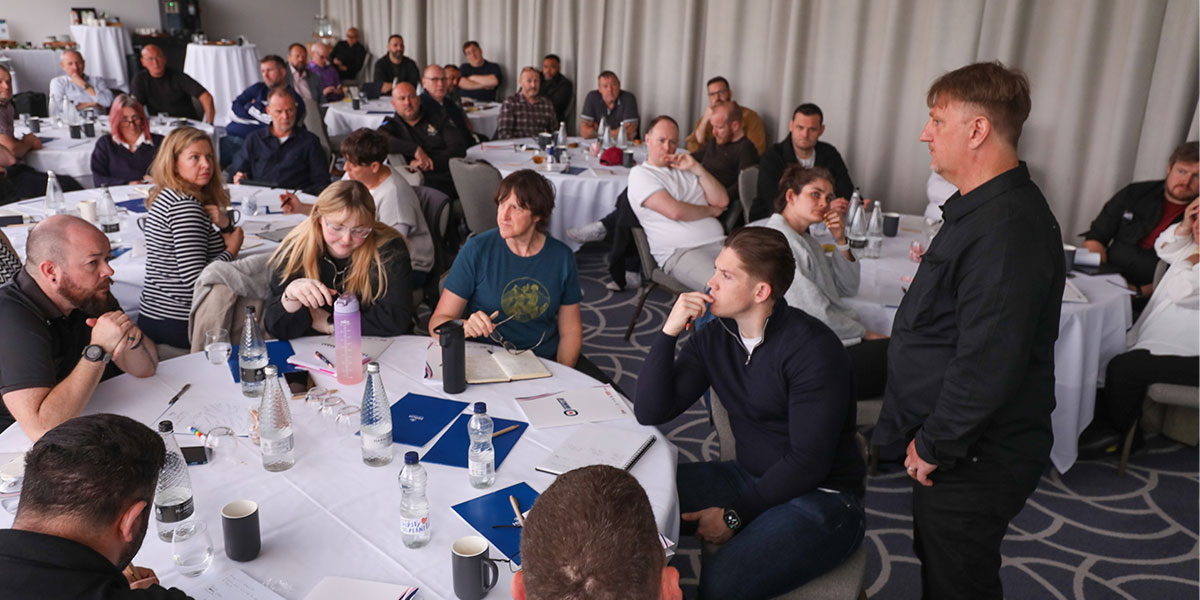
Following the lasting impact of The Astroworld Festival tragedy in 2021 in Houston, Texas – where 10 audience members died because of a crowd crush – Pink Bows Foundation, with two of their industry veterans are on a mission to standardise a global Showstop Procedure to further enhance the safety of music and sport fans around the world.
Steve Allen FdA MIFireE FIIRSM RSP, who has managed safety and security at major events for the past 30 years, and has toured with Led Zeppelin, Red Hot Chilli Peppers, Oasis and Eminem, among others; alongside Dr Mark Hamilton FdA MA (Dist.) HonD Univ, whose work includes being Director of Ground Operations at the 2012 Olympic and Paralympic Games and Director of Security for Sir Paul McCartney, are working with the Pink Bows Foundation to provide professional development for control room staff, touring and production crews, venue management, safety and security professionals. The Pink Bows Foundation was created in the wake of the Astroworld tragedy by the family of Madison Dubiski , aged 23, who was one of the 10 victims, beginning its work with Allen after he served as an expert witness in the Astroworld litigation.
“Madison’s Dad, Brian, reached out to me following the litigation, wanting to create some light out of the darkness they were facing,” Allen recalled.
“He was focussed on creating safer events and asked me to put together a crowd safety course, but we went further and decided to make a definitive Showstop Procedure course as there wasn’t one available.”
Allen then brought on Hamilton to aid in the creation of the course. Allen had pioneered the procedure in 1998 with Oasis, having now implimented 32 successful Showstops world-wide, each with safe outcomes.
Allen told TPi it felt right to have Mark on board. He explained: “We were both together when I named it Showstop Procedure, in Scotland, 28 years ago, so it’s great that after all of these year’s we’re able to put a definitive course together to train people from the industry how to plan for and implement this proven procedure.”
Hamilton attributed the need for the course to experiences that he has had on tour recently, citing instances in which he had attended established venues on a tour and discussed the Showstop Procedure, and there then began a discussion on who would take on the responsibility of calling it. “In the case of an emergency, we aren’t afforded the time to discuss because people could be in serious distress, and in some cases, dying,” he noted.
“Showstop is the most important tool available to anyone who needs to stop a show in an emergency. There are swathes of people in the industry who are experienced but have no idea what they’re doing when it comes to a Showstop. It is the training part that has been missing for the procedure for all these years.”
One size does not fit all for the Showstop Procedure, with Allen and Hamilton working hard on creating a framework that can be adjusted within the context of different events and crowds. “It’s very well to have a document titled ‘Showstop’, but it’s about whether the procedure fits the event and how it will be implemented. It comes down to a competency framework and asking if this the right person for this venue or crowd,” commented Hamilton.
With competency and clarity at the forefront of the roll out of the course, Allen elaborated: “Undesirable occurrences, even with comprehensive planning in place, can and do happen, so we want to ensure that the person standing side stage can make a judgment decision efficiently based on their experience, knowledge and training in a high-pressure situation that requires a rapid response.
“There are certain parallels between the Roskilde tragedy in 2000 compared to Astroworld and that is because we’re human and have a normalcy bias where we underestimate what could happen,” Allen continued. “Which is where the course comes in. We’ve worked with Professor Chris Kemp to combine our practical experience of Showstop, with academic principles to enhance learning adding the key principles of what expert witnesses will consider in the event of a major injury or death.”
After the inaugural course, in Houston, Texas in March 2025, the demand for training has since led to events held in Denmark, Ireland and Scotland, with the goal to expand it globally. The duo also hopes in time that those doing the course might, in turn, become trainers themselves.
The demand for the course to be rolled out further is expanding as more people partake and talk about it. Allen and Hamilton, alongside the Pink Bows Foundation, expect to see the course become the standard in the next decade, especially after receiving approval from The Institute of Risk and Safety Management, CPD accreditation, and other support from UKCMA and The Global Crowd Management Alliance. If your role relates to the safety of audience, look out for the Showstop Procedure course coming to a city near you.
Words: Alicia Pollitt

